


That camping trip your family still talks about? Science says it’s worth more than any toy under the tree.
Energizer has taken notice of the recent rise in battery-related ER visits among children.
In April, Energizer — one of the world’s largest battery manufacturers — launched new technology aimed at keeping coin batteries, also known as button batteries, out of the hands (and mouths) of children.
The company describes it as “the most comprehensive safety solution on the market.”
READ MORE: Rancher’s dog hailed a hero after leading missing toddler to safety
The new batteries, which are identified by a “3-in-1 Child Shield” icon on its package, are equipped with three new child-friendly safety features to reduce the risk of swallowing or ingesting a lithium coin battery.
Here’s a look at what those three new layers of defense are:
- Non-toxic bitter coating: this helps discourage swallowing and prevents ingestion.
- Child-resistant packaging: this makes it harder for children to access the batteries.
- Color Alert technology: this turns the mouth blue if the battery comes in contact with saliva.

In addition to the “3-in-1 Child Shield” icon, which is located in the top right of the package, the new design also includes an icon of a baby face and lock that reads “Color Alert + Secure + Bitter Coating.”
This was a landmark move by the company — and one that many parents today are applauding.
What are button batteries used for?
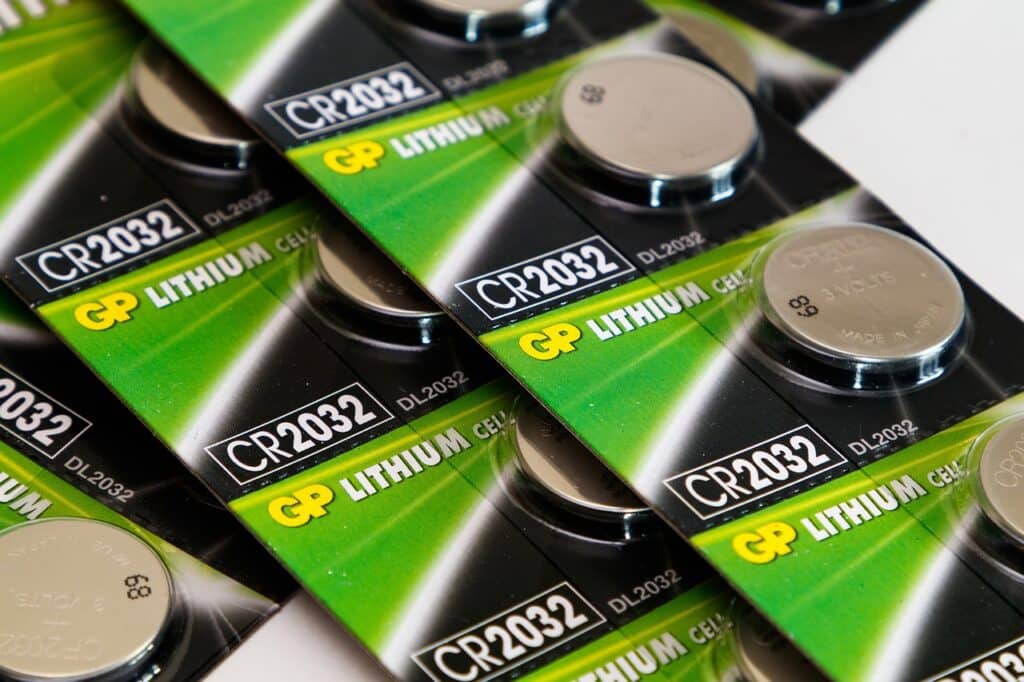
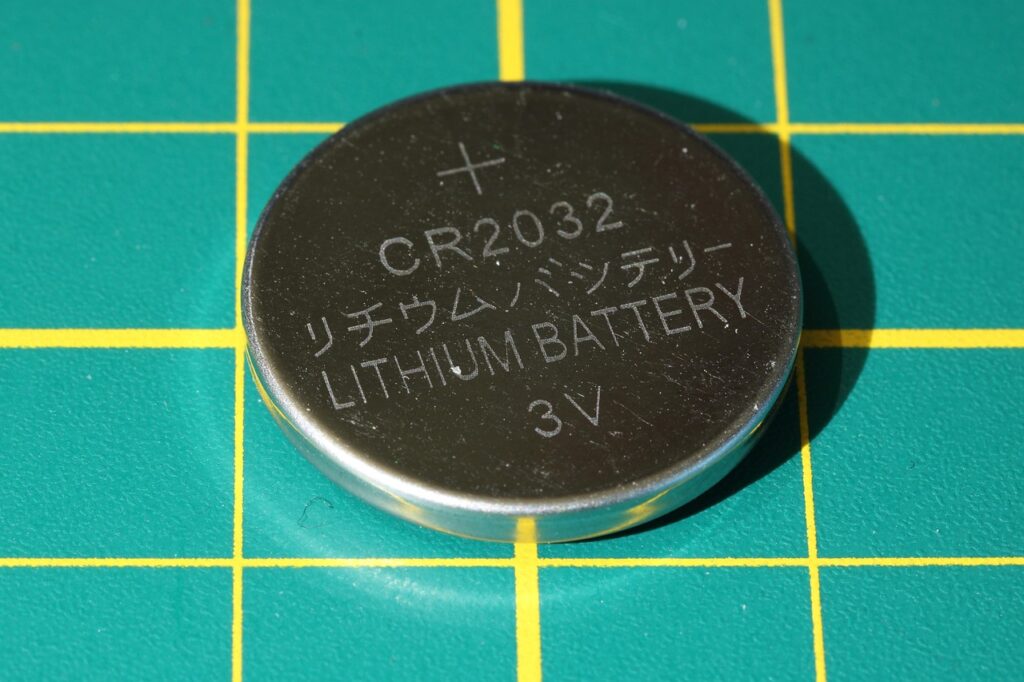
A button cell battery is a small, flat, round, single-cell battery used in almost all tiny electronic devices.
For example, it’s what powers most of the watches you put on your wrist, the hearing devices you put in your ears, the key fobs that power your vehicle and the food scales you use in the kitchen.
But it’s also the main power source behind a lot of your kids’ favorite toys.
Talking dolls or plushies, electronic games, items that light-up (fidget spinners, shoes, wands), musical books or cards, small robots — practically anything that makes sound or flashes contains a cell battery.
And since they look like tiny silver pieces of candy, they often end up in the wrong places.
What happens if a child ingests a button battery?
Swallowing or ingesting a button cell battery can lead to devastating injury or death — and it acts quickly.
In the event of a button battery becoming lodged in a child’s throat, it can create an electrical current that burns through soft tissue — a chemical reaction that often begins in as little as two hours.
The longer the battery remains in the esophagus, the more severe the damage can become.
READ MORE: CPSC and FDA issue urgent recalls on baby products that could impact your family’s safety
Symptoms aren’t always obvious right away. A child who has swallowed a battery may cough, drool, gag, refuse food, or complain of chest or throat pain, but some kids show no immediate signs at all.
That’s why Energizer’s new Color Alert technology could prove to be life-saving for children.
Not only will it help alert parents that their child had a battery in their mouth — and potentially swallowed it — but the added bitter coating on the battery will help reduce the chances of that swallowing occurring.
If your child does happen to swallow it, parents are urged to seek medical attention immediately.
The importance of button battery safety in the home
Energizer’s new design comes three years after a study highlighted the risks of button battery ingestion.
The 2022 study, published in “Pediatrics,” found that a child under the age of 18 visited the emergency department for a battery-related injury every 75 seconds in the years between 2010 and 2019.
It was more than twice the frequency of such ED visits between 1990 and 2009.
What was even more alarming was that 84% of those patients were five years old or younger and 12% of the cases resulted in immediate need for hospitalization — up from just 7% from 1990 to 2009.
As awareness grew, so did actions by the government and its corresponding agencies.
In fact, Energizer’s “Child Shield” battery was a direct response to the passing of Reese’s Law in 2022.
The law aimed to prevent serious injuries and deaths from children ingesting button cell batteries through stricter safety standards, warning labels and child-resistant packaging for products containing batteries.
It’s named after Reese Hamsmith, who tragically died from swallowing a button battery at 18 months old.
The CPSC has made button battery safety a priority in recent years
The Consumer Product Safety Commission (CPSC) knew they had to act quickly to keep kids safe.
On Sept. 11, 2023, the CPSC enacted new rules, stricter regulations and improved safety testing to reduce the risk of young children coming into contact or having access to button cell batteries.
“Over 70 children have died, and tens of thousands have found themselves in emergency rooms, after swallowing button batteries,” CPSC commissioner Richard Trumka wrote in a press release at the time.
“In recent years (2016-21), at least 27 children died after swallowing button batteries,” he added.
READ MORE: Thousands of kids' toys recalled as holiday shopping season heats up
As a result, new product recalls and safety warnings are issued every month as the CPSC looks to crack down on the dangers of cell battery ingestion — and hold manufacturers accountable for such risks.
For example, the CPSC recently recalled more than 10,000 KTEBO Writing Tablet Toys for violating the mandatory standard for toys.
“The screw used to secure the battery compartment that contains a button cell battery does not remain attached as required,” the CPSC warned on Dec. 4.
On Nov. 13, the CPSC recalled more than 32,000 packs of cell batteries for violating safety standards.
“The button cell and lithium coin batteries are not in child-resistant packaging and do not bear the warning labels required under Reese’s Law,” the warning read.
How to reduce battery-related injuries in the home
While manufacturers and federal agencies continue working to strengthen safety standards, the most effective protection against button battery ingestion will always start (and end) inside the home.
And that includes how parents store, use and dispose of such batteries.
For starters, parents should strongly consider purchasing Energizer’s “Child Shield” batteries to ensure that — even when your child does get ahold of a battery — there are additional safeguards in place.
Here are some other practical tips for button battery safety in the home:
- Check your home for devices that use button batteries.
- Store all batteries securely in a locked or high place.
- Never leave loose batteries out on tables, counters or in drawers.
- Inspect battery compartments to ensure they’re tight and secure.
- Replace or toss damaged toys with loose or broken compartments.
- Tape older devices closed if they don’t have child-resistant screws.
- Dispose of used batteries right away in a sealed, childproof container.
- Verify “dead” devices to make sure the battery didn’t fall out.
- Keep purses and bags out of reach, especially those with small electronics.
- Learn the signs of ingestion (coughing, drooling, gagging, chest pain).
- Seek emergency care immediately if you suspect a child swallowed a battery.
Energizer’s Child Shield technology isn’t a replacement for supervision, but it does give families another layer of protection in a world where tiny batteries power so many everyday items.
ALSO ON MOD MOMS CLUB: Experts are growing more concerned about the release of microplastics in plastic baby bottles
With safer packaging, bitter coatings and clearer warnings, experts hope these changes — paired with simple steps at home — will help prevent more children from being harmed.