


“Saturday nights with my future Olympian. I think I finally found someone who likes practice more than I did.”
Pacifiers are often a helpful comforts for a newborn — but what else are they capable of?
Thanks to the work of Miad Faezipour, an associate professor at Purdue University, pacifiers could soon play an important role in helping doctors detect and diagnose common newborn breathing problems.
It’s called a “smart pacifier” and it could change the way doctors care for newborns and premature babies.
READ MORE: New study links prenatal stress to earlier baby teething — here’s what researchers found
“Babies are so fragile and there’s no way that we can communicate with them,” Faezipour said in a news release published by Purdue University on Dec. 16.
“You can’t just ask a baby to breathe into a device to collect the breathing pattern. So we thought of something that is a natural interface for infants, and what better than a pacifier?” she added.
The device, which has a patent pending, uses “sound sensing technology and artificial intelligence-based analysis to track babies’ breathing in real time, safely and noninvasively,” according to Purdue.edu.
As the baby uses the pacifier, it tracks the baby’s breathing sounds and sends data directly to a parent or doctor for further analysis.

The project, which is expected to take four years to complete, is being funded by a $1.19 million grant issued by the National Institutes of Health (NIH) National Heart, Lung, and Blood Institute.
Faezipour is confident that the data received will be crucial to monitoring a child’s health early on.
“A particular frequency could give us information about the heart rate, while another frequency could give us information about the lung volume, the lung capacity, respiratory rate and other details,” she said.
According to the NIH, there are a wide range of newborn breathing problems to account for.
Some of the most common symptoms of newborn breathing issues include irregular breathing, grunting, or a bluish tint to the baby’s skin. Issues can often be treated if detected and diagnosed early.
This isn’t the first ‘smart pacifier’ to be developed
Ensuring newborns have access to quality healthcare is crucial to giving them the life they deserve.
And while Faezipour’s smart pacifier aims to give doctors and parents a leg up on monitoring a newborn’s breathing patterns, it’s not the first smart pacifier to be developed — albeit the first of its kind.
READ MORE: A mother’s voice could be the key to boosting brain and language growth in premature babies
In 2022, a team of researchers at Washington State University tested a smart pacifier that helps monitor a baby’s sodium and potassium ion levels through saliva sampling.
The goal of the pacifier is to eliminate the need for twice-daily blood draws to monitor babies’ electrolytes.
The saliva produced while sucking on the pacifier is collected through microfluidic channels that have sensors to measure the sodium and potassium ion concentrations in the saliva.
This data can help determine if a baby is dehydrated or not. If so, it allows for quick intervention.
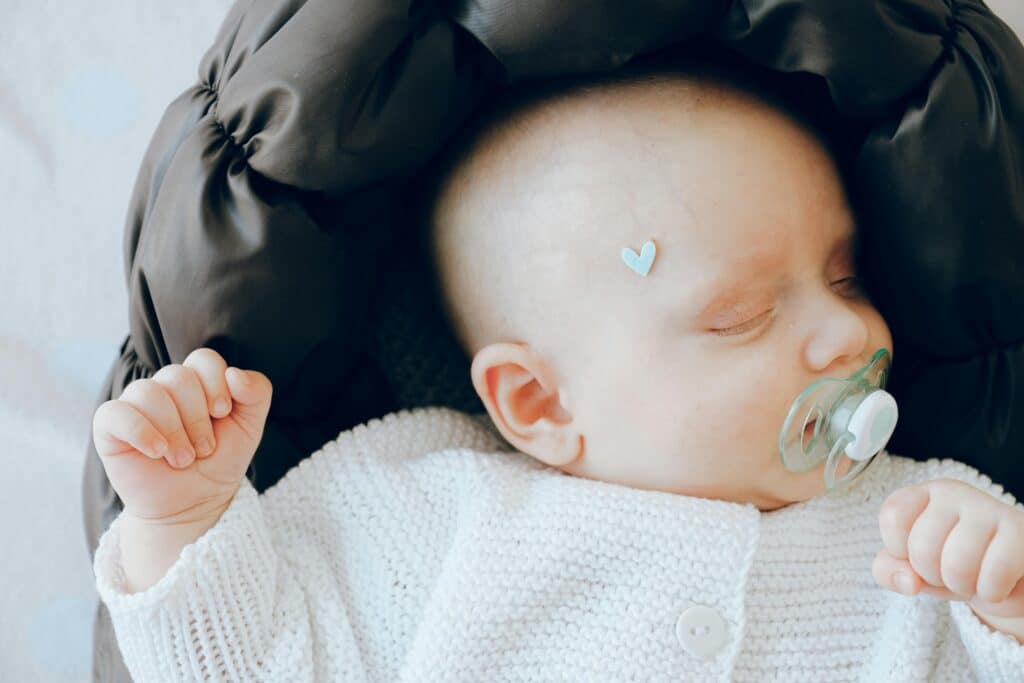
“We know that premature babies have a better chance of survival if they get a high quality of care in the first month of birth,” said Jong-Hoon Kim, associate professor at Washington State University.
“Normally, in a hospital environment, they draw blood from the baby twice a day, so they just get two data points,” he added. “This device is a non-invasive way to provide real-time monitoring of the electrolyte concentration of babies.”
ALSO ON MOD MOMS CLUB: Energizer’s revolutionary battery feature could help protect kids from a dangerous household hazard
Other smart pacifiers are being used to monitor neurodevelopmental milestones and take a baby’s temperature.