
“We’re going to try to make it as natural as possible for him. He’s going to live his life out here."
The creation of this article included the use of AI and was edited by human content creators. Read more on our AI policy here.
When Chlöe Bailey stepped onto the red carpet at the 2026 Grammys on Sunday, February 2, she wasn’t just there to celebrate music’s biggest night. In a candid interview by Billboard, the multi-talented artist opened up about something many of us have been feeling lately: a deep longing for the way music—and life—felt a decade ago.
Her answer to what she missed most from 2016 musically struck a chord that resonated far beyond the glittering Grammy venue.
'There’s No Humanely Possible Way'
Bailey didn’t hold back when reflecting on the state of today’s music landscape compared to ten years ago.
“Musically? The songs. There were so many songs back to back to back,” she told Billboard. “And also the appreciation of it because it’s not so overly saturated. 100k songs, every Friday, new. There’s no humanely possible way all of us will be able to digest that properly.”
READ MORE: Alex Warren’s Grammys Debut Hit a Snag—But His Wife Kouvr’s Response Is the Real Story
It’s a sentiment that captures something many music lovers have been grappling with in recent years. The sheer volume of content released weekly has fundamentally changed how we discover, consume, and connect with music. What once felt like anticipation—waiting for an album drop, discussing it with friends, letting it sink in over weeks and months—has been replaced by an endless scroll of new releases competing for our attention.
The music industry has become oversaturated with TikTok-trending music, something that was so unfamiliar in 2016. That year gave us albums that defined a generation: Beyoncé’s groundbreaking visual album Lemonade, Rihanna’s Anti (which remains, possibly ever, her last album), Frank Ocean’s critically acclaimed Blonde, and Chance the Rapper’s Coloring Book.
These weren’t just albums—they were cultural events. People gathered to experience them together, dissecting every lyric, every visual, every hidden meaning.
A Surprising Favorite Song Choice
When asked about her favorite song from 2016, Bailey’s answer revealed her deep appreciation for musical craftsmanship and the art of sampling.
“‘Whatcha Say’ [by] Jason Derulo,” she said. “Because he took my girl Imogen Heap’s ‘Hide n Seek’ and made it another classic.”
READ MORE: 10 Years of Nostalgia: Why the Internet Is Looking Back at 2016 With Rose-Colored Glasses
It’s worth noting that Bailey’s musical knowledge runs deep—she recognized and celebrated how Derulo transformed Imogen Heap’s haunting 2005 track into something entirely new while honoring its source material. For an artist known for her own innovative approach to R&B, this appreciation for creative reimagining makes perfect sense.
While she's best known for being part of the R&B duo Chloe x Halle with her sister Halle Bailey, the sisters actually made their professional debut in 2016 with the EP Sugar Symphony under Parkwood Entertainment.
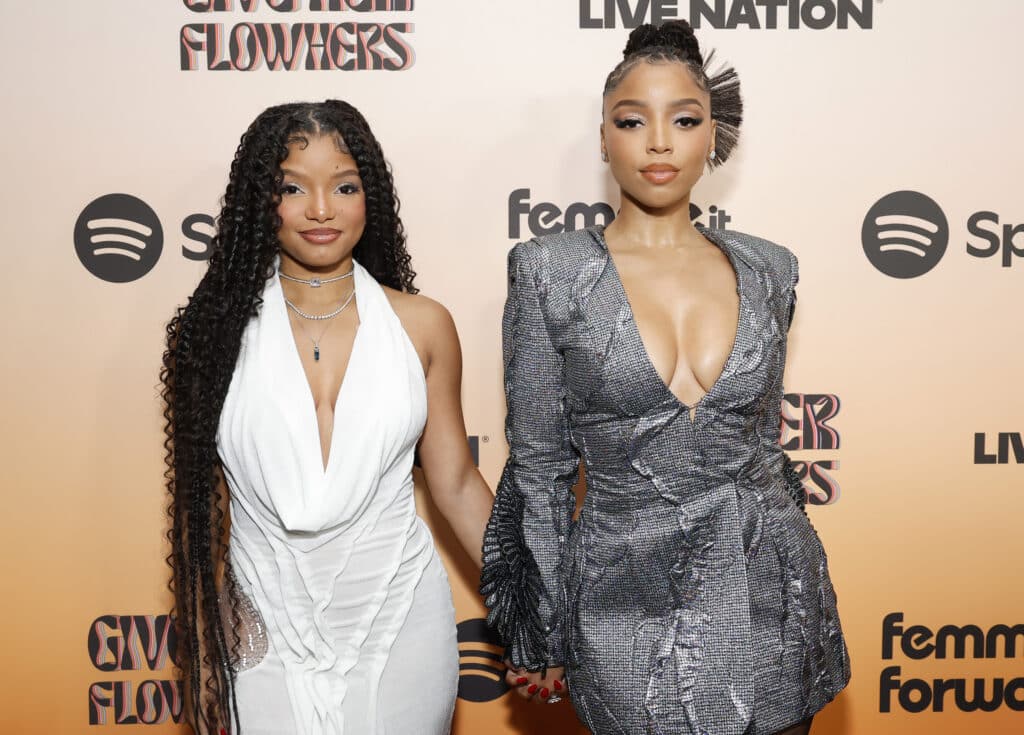
That same year proved transformative for the duo in another significant way: Chloe x Halle were featured as the opening act for the European part of Beyoncé’s Formation World Tour. Being handpicked by Beyoncé herself to open her tour was a career-defining moment that set the trajectory for everything that followed.
Since then, Bailey has established herself as a formidable solo artist. Her debut album, In Pieces, was released in 2023, which she followed up with her second studio album, Trouble in Paradise, released in 2024.
READ MORE: Nostalgia Used To Be a Serious Mental Health Disorder — But Now It’s Celebrated. Here’s Why
Why 2016? Why Now?
Bailey’s nostalgic reflection arrives at a moment when 2016 has been nostalgic for many people recently. But what’s driving this collective longing for a specific year that, at the time, felt like any other?
Simply put, people are craving a time that felt easier. Before AI. Before influencer culture felt inescapable.
Think about what the digital landscape looked like then. Back then, social media still felt fun—not overwhelming. In 2016, Instagram was a feed of friends, not faceless algorithms. Twitter was chaotic, sure, but it wasn’t yet a nonstop doomscroll. You actually saw updates from people you knew instead of a barrage of bots and outrage.
Here’s a telling detail: the term “doomscrolling” hadn’t been coined yet. We didn’t need a word for compulsively consuming negative news because that behavior hadn’t yet become a defining feature of our online lives.
Perhaps that’s why nostalgia for 2016 feels so potent right now. It represents the last moment before the floodgates fully opened, when music could still feel like a shared cultural experience rather than an individualized algorithmic feed.